How to Build a Strong Grant Proposal: The Anatomy of a Winning Application
You see competitors securing funding while your project sits on the shelf. It is not that their ideas are inherently better. They have simply learned to tell a clear, persuasive story that convinces grant officers to invest.
A grant proposal is more than a form to complete. It is your opportunity to present a credible, well-structured plan that delivers measurable business impact.
This guide breaks down winning proposals into three practical steps and leads you through a narrative approach that aligns project goals with grant objectives. Simplified examples, drawn from a successful grant-funded project, are included to illustrate each step in practice.
Check out a success story of a company that used grant funding to streamline operations & boost productivity: From Production Bottlenecks to 50% Faster Output: How a S$400K Automation Grant Transformed a 40-Year-Old Manufacturer in Singapore
Step 1: Crafting Your Origin Story
Every strong proposal starts by establishing credibility and clearly defining the problem. Grant officers need to understand who you are and why your project deserves support.
Executive Summary
The executive summary is the introduction to your proposal. It concisely presents your company, project, funding needs, and expected outcomes. A sharp summary captures attention and primes reviewers to view the rest of your proposal positively.
Example: “Our company provides semiconductor equipment solutions. We plan to streamline and automate our post-sales and maintenance operations to boost worker productivity and overall profitability. The project seeks grant funding to implement new automation systems and train staff to optimise workflows, targeting measurable efficiency gains and cost savings over 12 months.”
Company Background
Your company background demonstrates capability and track record. Highlight milestones, key products, market presence, and expertise. Funders back teams they can trust, not just ideas.
Example: “Founded in 2007, we serve clients locally and internationally, employing over 50 staff. Our portfolio includes long-term contracts with key clients, and we recently formed a joint venture in Japan to expand our technical expertise and service offerings.”
Context & Problem
Clearly defines the pain points your project will address. Providing context with comparative benchmarks demonstrates why intervention is necessary and reviewers can immediately understand the urgency and impact of funding the solution.
Example: Current manual refurbishment processes require 12 - 15 hours per unit, limiting throughput to 50 units per month. This is significantly below the target of 100 units per month needed to meet client demand and scale operations efficiently. The bottleneck creates delays in fulfilling orders, increases labor costs by approximately S$200,000 annually, and reduces overall productivity.
Proposed Solution & Scope
Show how your project addresses the problem. Define the scope clearly so funders understand what will be done, not just why. It also prevents scope creep and shows that the team understands project boundaries.
Example: ”To address the bottleneck in refurbishment processes, the company will implement an automated refurbishment system and optimise workflows. This will reduce manual processing time from 12–15 hours per unit to approximately 6 - 7 hours per unit, effectively doubling throughput to 100 units per month.”
In Scope | Out-of-Scope |
|---|---|
Procurement and installation of automation equipment | Expansion into unrelated product lines |
Workflow redesign and process optimisation | External service partnerships not related to refurbishment |
Staff training on new systems | Maintenance for poorly serviced units beyond the first 12 months |
Integration of the automated system with existing operations | |
Pilot testing and phased rollout across departments |
Story Break: The reviewer now understands who you are, what your project is, and why your business can deliver. Your credibility has set the stage for transformation.
Step 2: Mapping the Transformation
Once your origin story is established, demonstrate how your project will move from the current state to measurable results.
Project Objectives
Set clear, specific goals aligned with the grant’s priorities. Objectives show direction and prove the project aligns with funding intent.
Example:
Reduce average refurbishment cycle time by at least 30% within 12 months, and 50% at the end of 24 months
Increase throughput by 100% from 50 to 100 units per month
Cut labor costs by $200,000 annually
Work plan & Milestones
Explain how you will achieve these objectives. Outline steps, workflow improvements, and tools. A clear, phased timeline demonstrates project control, sets realistic expectations, and reassures reviewers that the project can be executed successfully. Including duration, activities, and expected outcomes provides transparency and measurable checkpoints.
Example: The project is structured in four phases over 12 months
Phase | Duration | Key Activities | Expected Outcome |
|---|---|---|---|
Phase 1: Vendor Onboarding & Design Sign-off | Months 1 - 2 | Select automation vendor, finalise equipment design, confirm project KPIs | Ready-to-install system, aligned on scope and objectives |
Phase 2: Pilot Implementation | Months 3 - 5 | Install and test automation system in Dept A, train staff, monitor pilot performance | Validate system effectiveness, gather operational data |
Phase 3: Organization-wide Rollout & Training | Months 6 - 9 | Expand installation to all departments, complete staff training, optimise workflows | Full adoption of automation, improved process efficiency |
Phase 4: KPI Review & Optimisation | Months 10 - 12 | Analyse productivity and cost metrics, refine processes, finalise reporting | Confirm achievement of targets, implement continuous improvement plan |
Budget & Funding
Providing a detailed breakdown of project costs shows reviewers that funding will be used responsibly and strategically. Clearly separating cost categories and specifying the grant ask versus co-funding builds credibility. A detailed budget table allows reviewers to quickly see where funds are allocated and how the grant will accelerate outcomes.
Category | Cost ($) | Note |
|---|---|---|
Equipment & Software | 400,000 | Automation machinery and related software licenses |
Implementation & Integration | 200,000 | Installation, system setup, and process integration |
Training & Change Management | 100,000 | Staff onboarding, workshops, and process adoption support |
Project Management | 100,000 | Internal PM, vendor coordination, and reporting |
Total Project Cost | 800,000 | |
Grant Ask (50 - 70%) | 480,000 - 560,000 | Depends on grant guidelines |
Company Co-Fund | 240,000 - 320,000 | Remaining project costs covered by company |
Story Break: The journey from challenges to results is clear. Objectives, plans, and expert support show that your project is structured to succeed, not just imagined.
Step 3: Proving the Impact
Finally, show that your project will deliver measurable results. A strong proposal positions your business as a strategic partner that funders can trust.
Success Metrics & Forecasts
This section shows what outcomes are expected and how they will be measured. Combining forecasts with metrics provides transparency and accountability, helping reviewers see both the expected impact and how progress will be tracked throughout the project.
Outcome Area | Metric | Forecast | Measurement Method |
|---|---|---|---|
Productivity | Hours per unit | Reduce from 12-15 hours/unit to 6-7 hours/unit | Time-tracking logs pre- and post- automation |
Throughput | Units/month | Increase from 50 units/month to 120 units/month | Production reports from ERP system |
Labour Costs | Annual Savings | ~$200,000 | Payroll vs pre-automation baseline |
Revenue Uplift | Annual additional revenue | ~$1.2M from increased capacity | Sales reporting & invoicing records |
Quality / Defects | % of defective units | Reduce from 8% → 2% | QA inspection logs |
Environmental / ESG | tCO₂e reduction | Reduce 15% energy consumption per unit | Energy monitoring systems |
Story Break: The grant officers now see expected outcomes, metrics, and accountability measures in one integrated view.
Bring Your Grant Proposal to Life
A strong grant proposal is a story of transformation that convinces grant officers your project can deliver measurable impact. You have seen how each step, from establishing credibility to mapping the transformation and proving results, builds a compelling case for funding.
Grant applications can be overwhelming. Different portals, endless paperwork, and unclear requirements put first-time applicants at risk of highly avoidable rookie mistakes.
Many applicants lose time or get rejected for avoidable errors. Check out the 5 Common Pitfalls to Avoid When Applying for Grants to avoid these traps.
Get started today with Grant Match to find the right opportunities for different business goals and let us help you turn your proposal into a funded project.
Startups
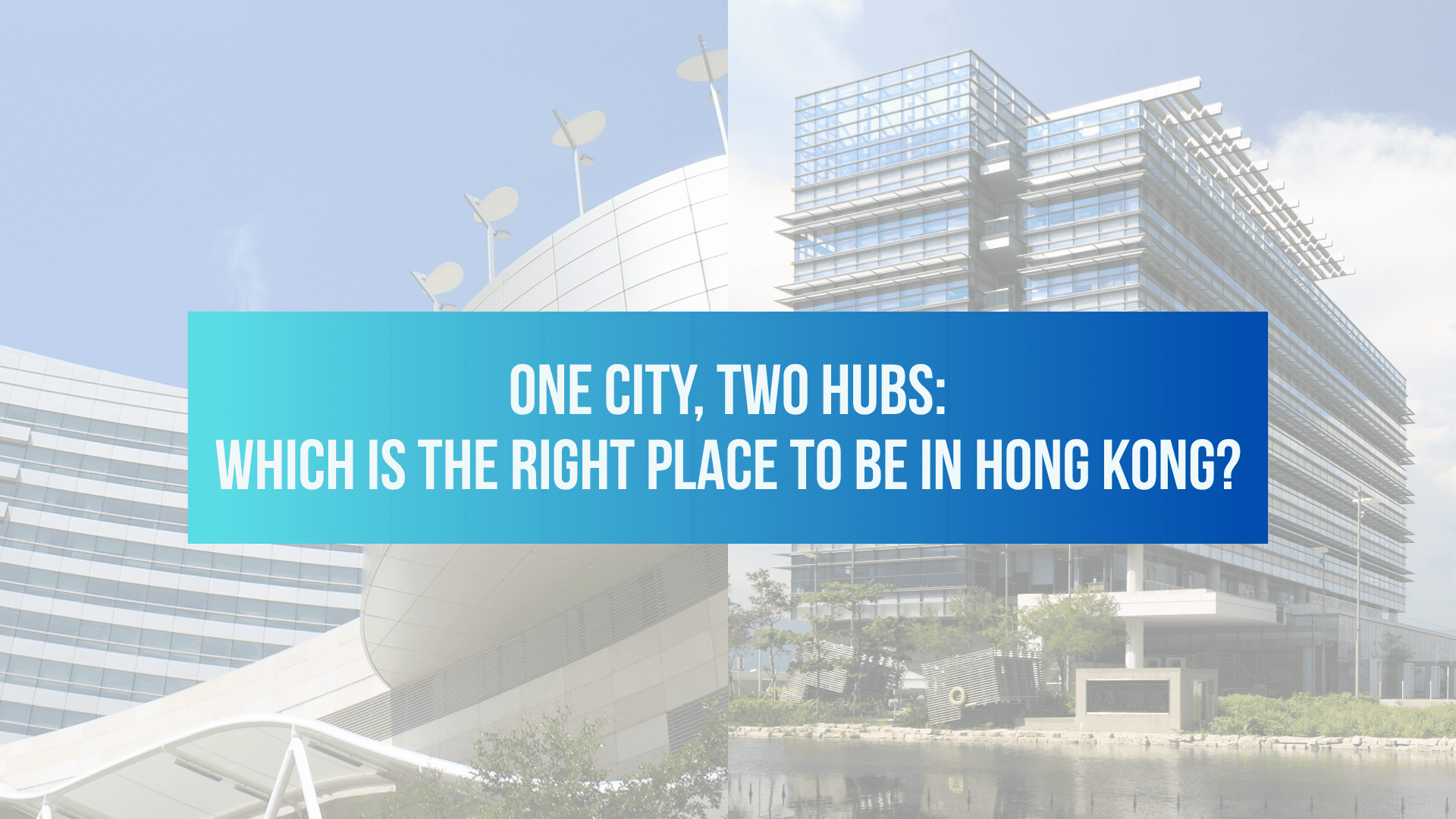
Cyberport vs HKSTP (2025): Which Hong Kong innovation hub fits your startup?

Lewis Lee
Nov 11, 2025
Startups
Hong Kong Startup Funding Path: Which Cyberport / HKSTP Programmes, When?
Lewis Lee
Oct 29, 2025
Startup Funding
High-Leverage Hiring Schemes to Retain Deep Tech Talents Without Burning Equity in Hong Kong
Lewis Lee
Nov 19, 2025